
Safe Banking
Financial Literacy: The Key to Safe and Smart Money Management
3 min read
•
Feb 10, 2026

In today’s digital-first financial ecosystem, managing money is no longer limited to saving and spending. From online banking to digital payments and investments, individuals must be financially aware to protect themselves from fraud and make informed decisions. Financial literacy plays a crucial role in empowering people to understand financial systems, comply with regulatory requirements like KYC, and safeguard their hard-earned money.
This blog explains the importance of financial literacy with a focus on KYC updates, CYC ID, KYC fraud awareness, and money mule awareness.
WHAT IS FINANCIAL LITERACY?
Financial literacy refers to the ability to understand and effectively use financial skills such as budgeting, banking, investments, credit management, and fraud prevention. A financially literate individual can make informed decisions, avoid financial scams, and comply with legal and regulatory norms.
IMPORTANCE OF UPDATING KYC
KYC (Know Your Customer) is a mandatory process used by banks and financial institutions to verify the identity and address of customers.
Why updating KYC is important:
- Ensures uninterrupted access to banking services
- Helps prevent fraud and identity theft
- Required as per regulatory guidelines
UNDERSTANDING CYC ID
A CYC ID is a 14-digit unique identification number issued after completing Central KYC (CKYC). It allows customers to complete KYC only once and use it across multiple financial institutions.
Benefits of CYC ID:
- One-time KYC for multiple services
- Faster account opening
- Reduced paperwork
KYC FRAUD AWARENESS
KYC fraud happens when fraudsters misuse personal information like Aadhaar, PAN, OTPs, or passwords.
Common scams include:
- Fake calls asking for KYC updates
- Fraudulent emails and SMS
- Requests for OTP or bank details
Always use official bank channels and never share sensitive details.
MONEY MULE AWARENESS
A money mule is a person who allows their bank account to be used to move illegal money.
Risks include:
- Account freeze
- Legal action
- Financial loss
Never share your bank account details or accept easy-money offers.
CONCLUSION
Financial literacy helps individuals protect themselves from fraud, comply with regulations, and manage money responsibly.
FREQUENTLY ASKED QUESTIONS
Is KYC mandatory?
Yes, KYC is mandatory for all bank accounts.
What is a CYC ID?
It is a unique number that allows one-time KYC across institutions.
What should I do if I suspect fraud?
Immediately inform your bank and block affected services.
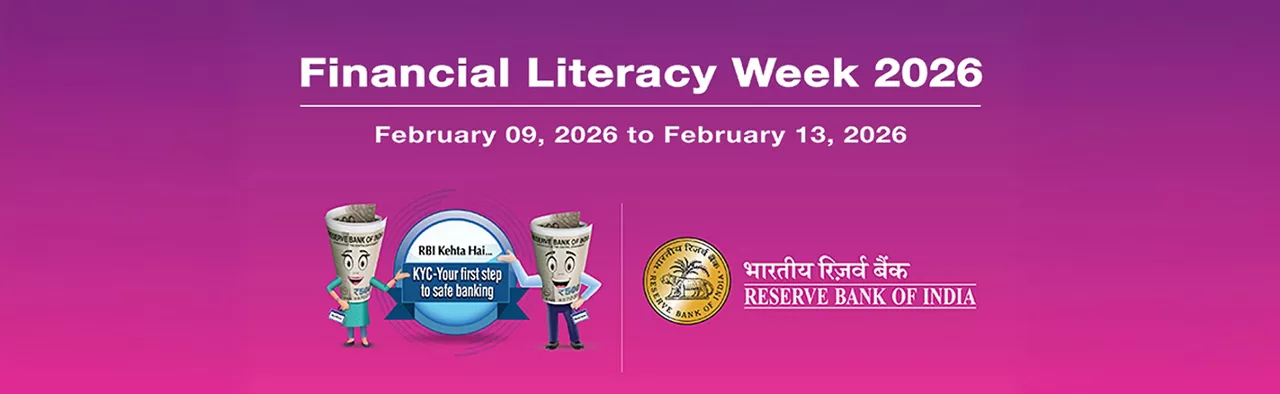
Financial Literacy Week 2026
Financial literacy week poster ( Hindi )
Financial literacy week poster ( English )
Financial literacy week poster ( Oriya )
Financial literacy week poster ( Tamil )
Financial literacy week poster ( Urdu )
Financial literacy week poster ( Bengali )
Financial literacy week poster ( Gujrati )
Financial literacy week poster ( Kannada )
Financial literacy week poster ( Malayalam )
Financial literacy week poster ( Marathi )
Financial literacy week poster ( Punjabi )
Financial literacy week poster ( Telugu )
Financial literacy week poster ( Assamese )

People with similar interests also read: