
Loans
How Personal Loan Cancellations Affects Your Credit Score?
3 min read
•
Aug 13, 2026

Introduction
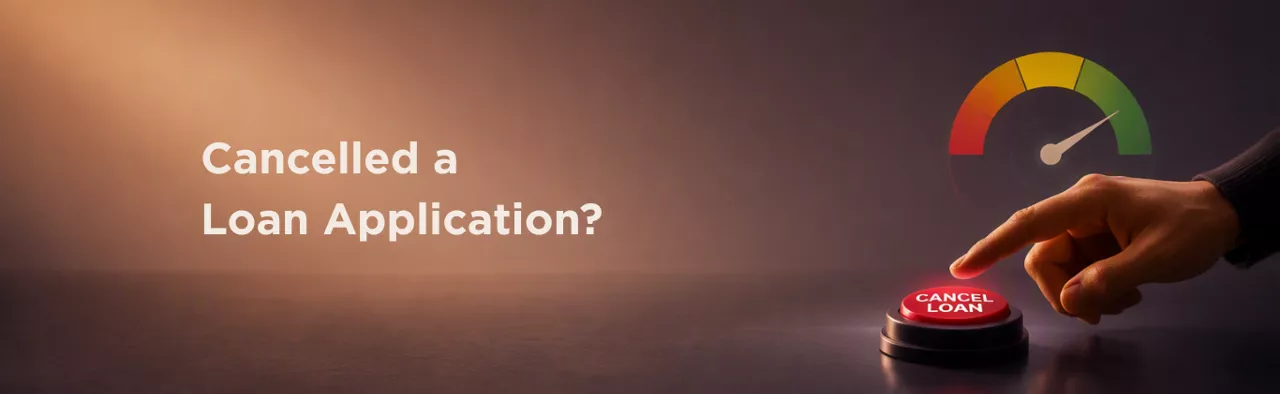
Applied for a personal loan and had a change of heart? Whether it's a better offer elsewhere, a change in your financial needs, or simply reconsidering the timing, cancelling a personal loan application is more common than you'd think. But the key question most borrowers have is: will cancelling the loan hurt your credit score? The answer depends entirely on which stage of the process you're at.
Does Cancelling a Personal Loan Affect Your Credit Score?
It depends on the stage of cancellation:
Before the lender pulls your credit report: If you cancel your application before the lender makes a formal inquiry with a credit bureau like CIBIL, there is no impact on your credit score at all no footprint is left because no inquiry has been made yet.
After the credit inquiry, before disbursal: At this stage, the lender has already made a formal hard inquiry into your credit report, which is visible on your credit history. However, cancelling the loan at this point does not cause further damage your score simply reflects the single inquiry, not an active loan.
After disbursal, within the cooling-off period: Most loan agreements include a cooling-off period (commonly 7-10 days) during which you can cancel even after the loan amount has been credited to your account. You'll typically need to repay the principal, and possibly a few days' interest, but this generally does not have a lasting negative effect on your credit score if handled correctly and promptly.
What a Hard Inquiry Actually Does to Your Score
A hard inquiry triggered the moment a lender checks your credit report as part of your loan application can cause a small, temporary dip in your credit score, typically in the range of a few points. This dip is not related to whether you eventually take the loan or cancel it; it happens purely because the inquiry was made. Multiple hard inquiries within a short period, from applying to several lenders at once, can have a more noticeable cumulative effect.
Reapplying for a Personal Loan After Cancellation
If you've cancelled a personal loan and plan to apply again later, keep these points in mind:
- Aim for a credit score above 750 for the best chance of approval and favourable interest rates.
- Give it some time before reapplying applying again too soon can add another hard inquiry to your report.
- Avoid applying to multiple lenders simultaneously, as this compounds the impact of hard inquiries.
- Review your credit report for accuracy before your next application, to ensure there are no errors affecting your score.
Steps to Cancel a Personal Loan the Right Way
1. Check your loan agreement for the specific cancellation or cooling-off period terms.
2. Contact your lender promptly, ideally before disbursal or within the cooling-off window.
3. If funds have already been disbursed, repay the principal amount along with any applicable interest for the days the funds were held.
4. Confirm in writing that the loan has been closed and request an updated status reflected with the credit bureau.
Conclusion
Cancelling a personal loan doesn't have to be a credit score disaster the impact depends heavily on timing. Cancel before the credit inquiry, and there's no effect at all. Cancel after the inquiry but before disbursal, and the impact is minimal and temporary. The key is to act promptly, understand your loan agreement's cancellation terms, and avoid a pattern of repeated applications and cancellations, which can start to signal inconsistency to future lenders.
Frequently Asked Questions (FAQ’s)
1. Will cancelling my personal loan show up on my credit report?
If cancelled before a credit inquiry, no. If cancelled after an inquiry, the inquiry itself will appear on your report, but the loan won't show as an active or defaulted account.
2. How long should I wait before reapplying for a personal loan after cancellation?
There's no fixed rule, but waiting a few weeks to a couple of months, and ensuring your credit score is in good shape, generally improves your chances on reapplication.
3. Does cancelling a loan after disbursal count as a default?
No, as long as you cancel within the agreed cooling-off period and repay the principal (and any applicable interest) as required, it is not treated as a default.
4. Can I cancel a personal loan for any reason?
Yes, most lenders allow cancellation for any reason, provided you follow the cancellation process outlined in your loan agreement and any applicable cooling-off period.
5. Does a cancelled loan application affect future loan eligibility?
A single cancelled application generally has minimal long-term impact. However, a pattern of frequent applications and cancellations may raise questions with future lenders about financial planning consistency.

People with similar interests also read: